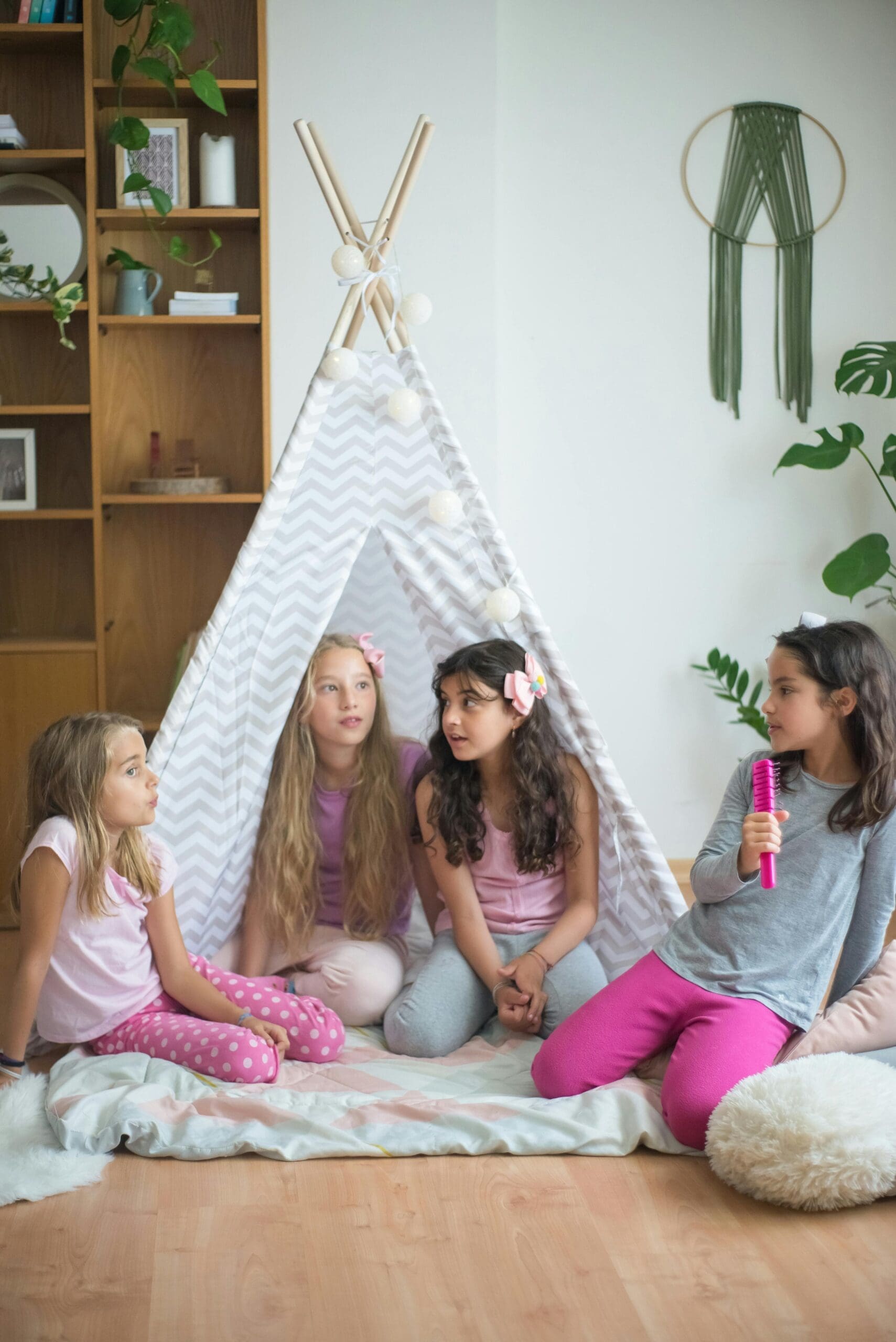


A children’s sleepover party doesn’t need to feel like an endurance test.
Most of the ones that go wrong don’t fail because of what was planned. They unravel because of what wasn’t: too many children, no clear structure, and a bedtime that nobody agreed on.
After setting up hundreds of sleepover parties across Cambridgeshire, these are the things I’ve seen make the real difference. Not the decorations or the activities, but the behind-the-scenes decisions that keep the evening running calmly from start to finish.
Keep the group small
This is the single biggest factor.
The more children there are, the harder the energy is to manage and the more likely someone ends up upset, overtired, or left out. It’s not that large groups can’t work, but they require a different level of attention and the dynamic shifts quickly.
For most homes, four to six children is a comfortable number. Eight at the most if you have the space. Beyond that, the evening often tips from manageable to unpredictable.
A smaller group also means:
- Calmer energy throughout the evening
- Less noise for neighbours (and for you)
- A much better chance that everyone actually sleeps
If your child wants to invite more, consider a daytime party with a smaller sleepover group staying on afterwards. It gives everyone the celebration without the 2am fallout.

Tell the other parents what to expect
This is the step most people skip, and it’s one of the most useful.
A short message to parents a few days before, covering drop-off time, collection time the next morning, what to bring, and what’s provided removes a surprising amount of back-and-forth on the day.
Worth including:
- What time to arrive and what time to collect
- Whether they need a sleeping bag or if bedding is provided
- Any food you’re planning (and a prompt for allergies or dietary needs)
And make sure you have phone numbers for both parents of any child attending, in case you need to get in touch overnight.
This is especially important if any of the children haven’t been to a sleepover before. A quick note to those parents, letting them know you’re happy to call if their child wants to come home, goes a long way. It reassures them and means you’re not navigating that conversation for the first time at 11pm.
Set the ground rules early
A short conversation at the beginning of the evening makes everything easier later on.
Be clear about:
- Which areas of the house are being used (and which aren’t)
- What time the lights go off
- What “settling down” means (are they expected to stay in their sleeping space, or can they still move around, for example?)
This isn’t about being strict. It’s about giving the children a framework they can work within. Without it, you end up managing behaviour reactively rather than guiding the evening calmly. And the children themselves are usually more comfortable when they know what’s expected.
Frame it lightly: “Right, here’s the plan for tonight…” rather than a list of rules.
Plan the shape of the evening
The most successful sleepovers have a natural arc: higher energy early on, then a gradual shift towards calmer activities as bedtime approaches.
You don’t need a minute-by-minute schedule, but a rough shape helps:
- Arrival and early evening: Games, music, dancing, a scavenger hunt: anything that lets them burn off the initial excitement.
- Mid-evening: Something more focused. Crafting, a pamper station, or a group activity they can settle into.
- Later evening: A film, quiet chatting, or reading in their sleeping spaces.
The shift doesn’t need to be forced. If the activities are sequenced well, the energy comes down naturally. It’s when there’s no structure at all that things tend to escalate.
If you’re looking for specific activity ideas, I’ve written a separate post: 10 Sleepover Games That Work Every Time.
The 30 minutes before bed
This is the window that determines how the rest of the night goes, and most people don’t plan for it at all.
Once the last activity ends and you announce it’s time to settle down, there’s often a gap where the children are wired but directionless. That’s when the giggling escalates, someone starts running around, and any calm you’ve built up disappears.
What works:
- Give a clear 15-minute warning before the final activity ends
- Have them change into pyjamas and get into their sleeping spaces before the last film or quiet activity starts, not after
- Keep the lighting low once they’re settled
- Stay nearby but don’t hover
The goal is a gradual dimming, not an abrupt switch-off. If they’re already lying down and comfortable by the time for lights-out, the transition to sleep is more natural rather than a battle.
Create a comfortable sleep setup
Where and how the children sleep has a bigger impact on the night than most parents expect.
A sleeping bag on a bare floor is fine in theory but by 2am the discomfort often leads to restlessness, which wakes everyone else. One unsettled child can reset the whole group.
Focus on:
- Proper padding or mattresses: something with genuine cushioning, not just a thin layer between them and the floor
- Enough personal space: children sleeping on top of each other sounds fun at 8pm but causes problems by midnight
- A defined sleeping area for each child: even a simple boundary helps them feel settled
Small details make a difference: soft lighting rather than the main light on a dimmer, cosy bedding and blankets rather than a single sleeping bag, and a sense that each child has their own space.
This is one of the reasons teepee sleepover hire has become popular for children’s parties. Each child gets their own individual tent with a proper mattress and bedding, which removes the two biggest causes of disrupted sleep: discomfort and encroaching on each other’s space.

Be ready for unsettled moments
Even confident children can feel wobbly at bedtime, particularly if it’s their first sleepover away from home.
This is completely normal. How you handle it makes all the difference:
- Stay calm and quiet. Don’t draw the group’s attention to it. Move to the child rather than calling across the room.
- Reassure simply. Often a quiet “You’re alright, I’m just here if you need me” is enough.
- Have parent contact details to hand. If a child wants to go home, don’t try to talk them out of it. Call the parent, explain calmly, and let them decide together. Most of the time the child settles within a few minutes of knowing the option is there. But if they don’t, a calm, kind collection is far better than a child feeling trapped.
The parents who handle this best are the ones who expected it might happen. It’s not a failure, it’s a normal part of children learning to be away from home.
Keep the morning simple
The morning after a sleepover often gets overlooked, but it sets the tone for how everyone remembers the experience.
Children will be tired. Some will be grumpy. The last thing you need is to be preparing a cooked breakfast for eight while managing the energy of a group that’s been awake since 5:30am.
Keep it simple: pastries, fruit, cereal, juice. Set it out before they wake up if you can. It keeps the morning calm and gives the whole event a considered ending rather than a chaotic one.
Set a clear collection time (usually mid-morning) and communicate it to parents in advance. This avoids the sleepover stretching into a full day of entertaining when everyone (including you) is running on very little sleep.
The thread that runs through all of this
A well-run sleepover party isn’t about doing more. It’s about thinking ahead.
Small group. Clear expectations. A shape to the evening. Comfortable sleep setup. And a plan for the moments that don’t go smoothly.
When those things are in place, the evening tends to take care of itself, and you might actually enjoy it too.
For further practical sleepover party ideas with tips on food, activities, and keeping it stress-free, take a look at this article: 15 Sleepover Party Ideas Kids Will Actually Love.
If you’d rather have it handled
“She is a parent’s dream to deal with — quick and detailed replies, she worked so hard (quietly and calmly) setting up the fabulous staging. All the party-goers said it was THE BEST PARTY EVER.”
— Gemma
If sleepover party planning isn’t how you want to spend your week, I offer a fully styled teepee sleepover hire service across Cambridge and the surrounding towns and villages.
“No stress, no hassle and the sleepover of dreams for my daughter and her friends.”
— Lauren
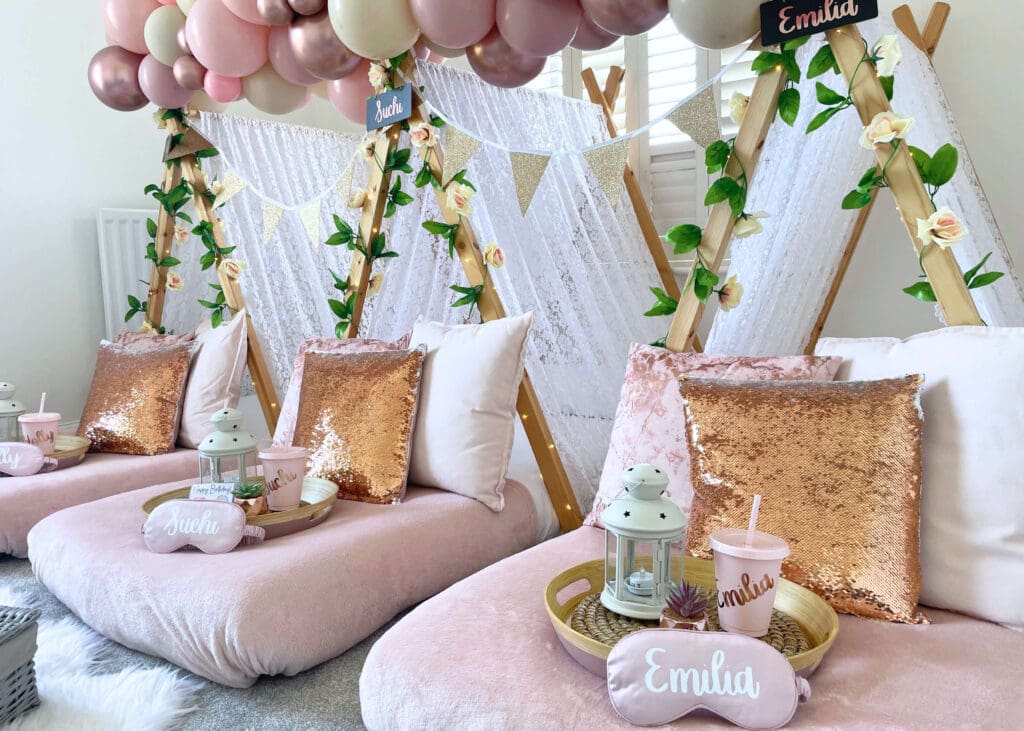
Everything is delivered, set up in your living room, and collected the next day. Proper memory foam mattresses, quality bedding, themed styling, and personalised details: it’s all included. You handle the children. I handle everything else.