

Keeping a group of children occupied during a sleepover doesn’t need to be complicated.
The best sleepover games are easy to explain, simple to run, and help guide the flow of the evening without needing constant input from you.
Here are ten reliable games to play at a sleepover for children aged 8–11, chosen because they work in real homes, with real groups, without complex setup.
1. Treasure hunt
A simple treasure hunt works well early in the evening and gives the group a shared focus from the start.
How it works:
- Prepare a short sequence of 5–8 clues in advance
- Each clue leads to the next location
- The final clue leads to a small prize (shared or individual)
Example clue progression:
- “Start where shoes are kept”
- “Now look somewhere cold” (fridge)
- “Find where you brush your teeth”
- “Look under something soft”
Why it works:
It brings the group together quickly, especially if not everyone knows each other.
My advice:
Keep clues straightforward so the game flows without needing help.
2. Lip sync battle
Children perform along to a song without singing, either individually, in pairs, or small groups.
How it works:
- Choose or assign songs (or let them pick)
- Give a few minutes to prepare
- Each child or group performs in turn
You can keep it informal, or add simple judging categories like:
- Most creative
- Best teamwork
- Most confident
Why it works:
It feels current and slightly more grown-up, without needing complex setup.
My advice:
Offer group performances as the default: it keeps it comfortable and inclusive.
3. Sleepover quiz
A simple team quiz gives the group a shared task and works well for mixed personalities.
How it works:
- Split into small teams or pairs
- Ask 8–10 short questions
- Keep scoring simple (or optional)
Question ideas:
- Simple general knowledge
- Guess the song
- Emoji clues
- True or false
Why it works:
It creates structure and keeps everyone involved without singling anyone out.
My advice:
Keep rounds short and move quickly between questions.
4. Pass the parcel (with a twist)
Wrap a small prize in multiple layers. Inside each layer, include a prompt.
How it works:
- Children sit in a circle and pass the parcel around while the music plays
- When the music stops, the child unwraps one layer and completes the prompt
Example prompts:
- Choose who unwraps the next layer
- Everyone clap once in time together
- Reverse the direction of passing
- Everyone stand up and sit down again
Why it works:
It’s structured, inclusive, and easy to manage.
My advice:
Keep prompts quick and low-pressure so the game doesn’t stall between turns.
5. Balloon pop prompts
Similar to the prompts in pass the parcel, choose some fun challenges and place one prompt inside a balloon before inflating. Ensure there is at least one balloon for everyone.
How it works:
- Each child takes a turn choosing and popping a balloon
- They read and complete the prompt inside
Example prompts:
- Do your best moonwalk for five seconds
- Tell your favourite joke
- High-five everyone in the room
- Do 10 star jumps
Why it works:
It combines structure with a small element of surprise.
My advice:
To minimise any unplanned popping before the game starts, don’t over-inflate the balloons and keep them away from direct sublight.
6. Minute-to-win-it
Set up a small number of simple, timed challenges. Each child has one minute to complete the task, and the winner is the person who either completes it successfully within the time or makes the most progress.
How it works:
- Explain the task clearly
- Set a one-minute timer
- Each child takes their turn, or everyone competes together, depending on the task
- Decide the winner based on completion or progress
You can play individually or in small groups.
Game ideas:
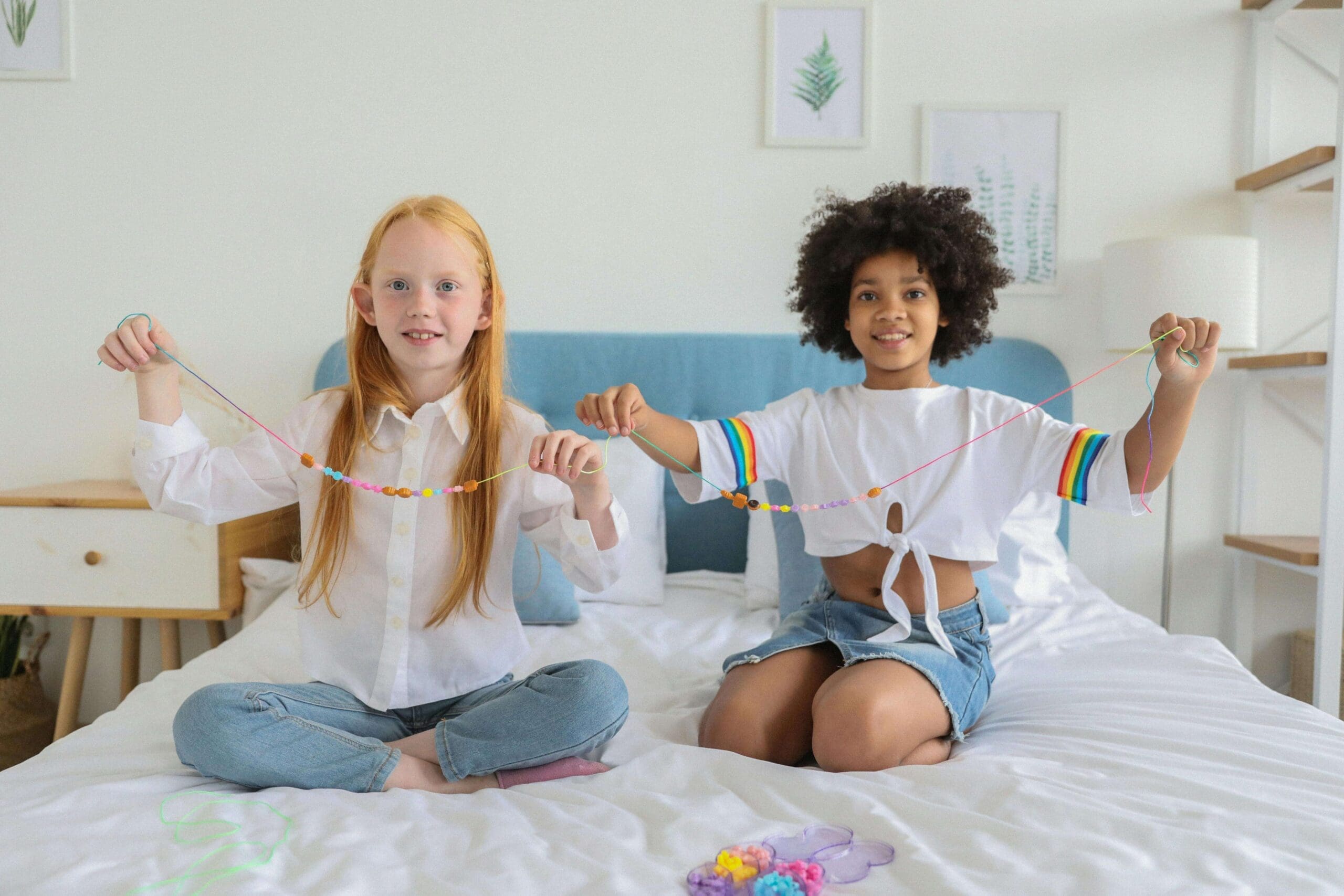
One-handed bracelet threading: thread as many Cheerios as possible onto a pipe cleaner using one hand. Winner: most threaded pieces.
One-handed Lego tower: build the tallest tower using one hand. It must be standing at the end. Winner: tallest stable tower.
Colour sort (straw challenge): use a straw to move sweets (such as M&Ms or Skittles) into colour groups using suction. Winner: most correctly sorted pieces.
Cup stack challenge: stack cups into a pyramid and back down again. Winner: fastest completion.
Why it works:
Short, focused tasks help channel early evening energy.
My advice:
Limit to three or four rounds to keep it contained.
7. Mystery box
Children guess items by touch alone, without looking.
How it works:
- Place items inside a box or under a cloth
- Each child reaches in and guesses what they’re touching
- You can allow one or two guesses per item
Examples of items:
- Block of uncooked jelly
- Bowl of uncooked rice
- Cooked spaghetti
- A scrunchie
- Cotton wool balls
- A small toy (a figurine or squishy toy)
- A clothes peg
- An ice cube
Aim for a mix of textures and familiar objects. The fun comes from working it out, rather than trying to catch anyone out.
Why it works:
Simple, engaging, and involves everyone.
My advice:
Keep it clean and contained, avoiding anything overly messy or unpleasant.
8. “Who’s most likely to…”
A simple group game where children choose who best fits each prompt.
How it works:
- Read out a prompt
- Everyone points to the person they think fits best
Examples:
- Who’s most likely to stay up the latest?
- Who’s most likely to forget their toothbrush?
- Who’s most likely to become famous?
Why it works:
Encourages interaction and helps the group bond.
My advice:
Keep all prompts kind and positive.
9. What’s-In-Your-Bag Bingo
A simple, low-prep game based on items the children have brought with them to the sleepover party.
How it works:
- Create a short list of items
- Children score a point for each item they have
Example items:
- Lip balm
- Hairbrush
- Something pink
- A snack
- A hair accessory
You can play individually or in teams.
Why it works:
It’s quick, relevant, and easy to run.
My advice:
Keep the list short (6–8 items) so it doesn’t lose momentum.
10. Who knows the birthday child best?
A short quiz centred around the birthday child.
How it works:
- Ask 5–10 questions about the birthday child
- Children write down their answers
- The birthday child reveals the correct answer
Example questions:
- Favourite food
- Favourite film
- Favourite colour
- Favourite subject
- Something they dislike
Why it works:
It naturally brings the focus back to the birthday child in an inclusive way.
My advice:
Keep questions simple so everyone can take part.
How many sleepover games do you need?
You don’t need to use all of these.
Two or three well-timed games are usually enough, especially if you:
- Start with something group-based
- Include one structured activity
- Then move into something calmer
The aim is to keep the evening moving without it feeling busy or over-managed.
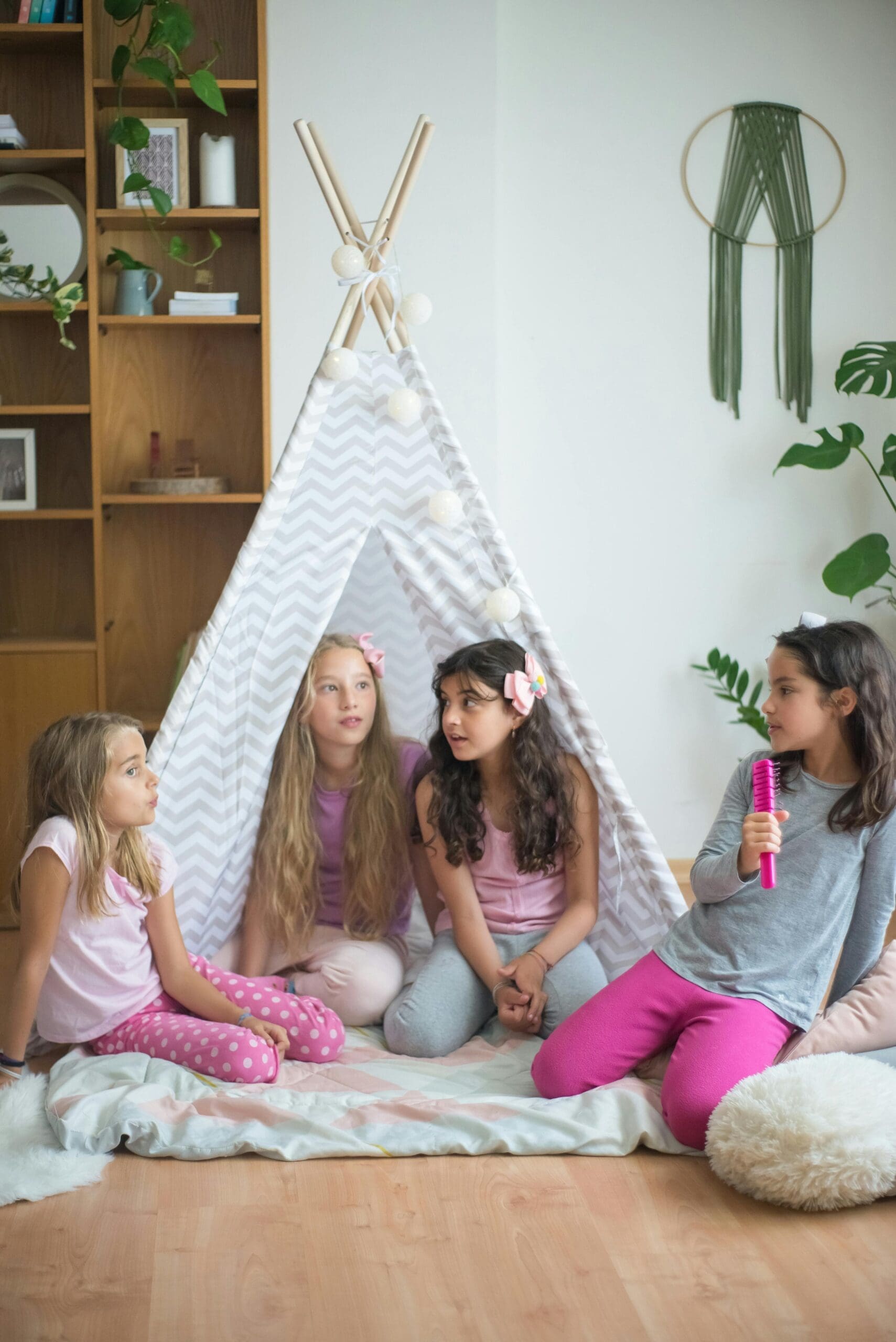
Several of these games work particularly well with a teepee sleepover setup, where each child has their own base to return to between games. It gives the evening a natural rhythm: group activity, then back to their own space, which helps keep the energy manageable.
What makes a good sleepover game?
The most reliable sleepover games share three things:
- They’re easy to explain
- They don’t rely on complex setup
- They run smoothly once they begin
When those pieces are in place, the evening tends to take care of itself.
If you’d like help planning the rest of the evening
Fun sleepover games will keep the children occupied, but the overall flow of the evening matters just as much.
If you’re thinking about where everyone sleeps, what to feed them, and how to keep the whole evening running smoothly, these two guides cover the rest:
- 15 Sleepover Party Ideas Kids Will Actually Love: covers setup, food, and finishing touches alongside sleepover activities
- How to Host a Sleepover That Actually Runs Smoothly: the practical hosting decisions that make the biggest difference
“No stress, no hassle and the sleepover of dreams for my daughter and her friends.”
— Lauren
Between these three articles, you’ll have everything you need to pull together a perfectly customised birthday sleepover party. Or if you’d rather hand over the setup logistics, you can explore my teepee sleepover packages here.